Visit website
855 How to quit
Published Jan 31, 2026
Concept
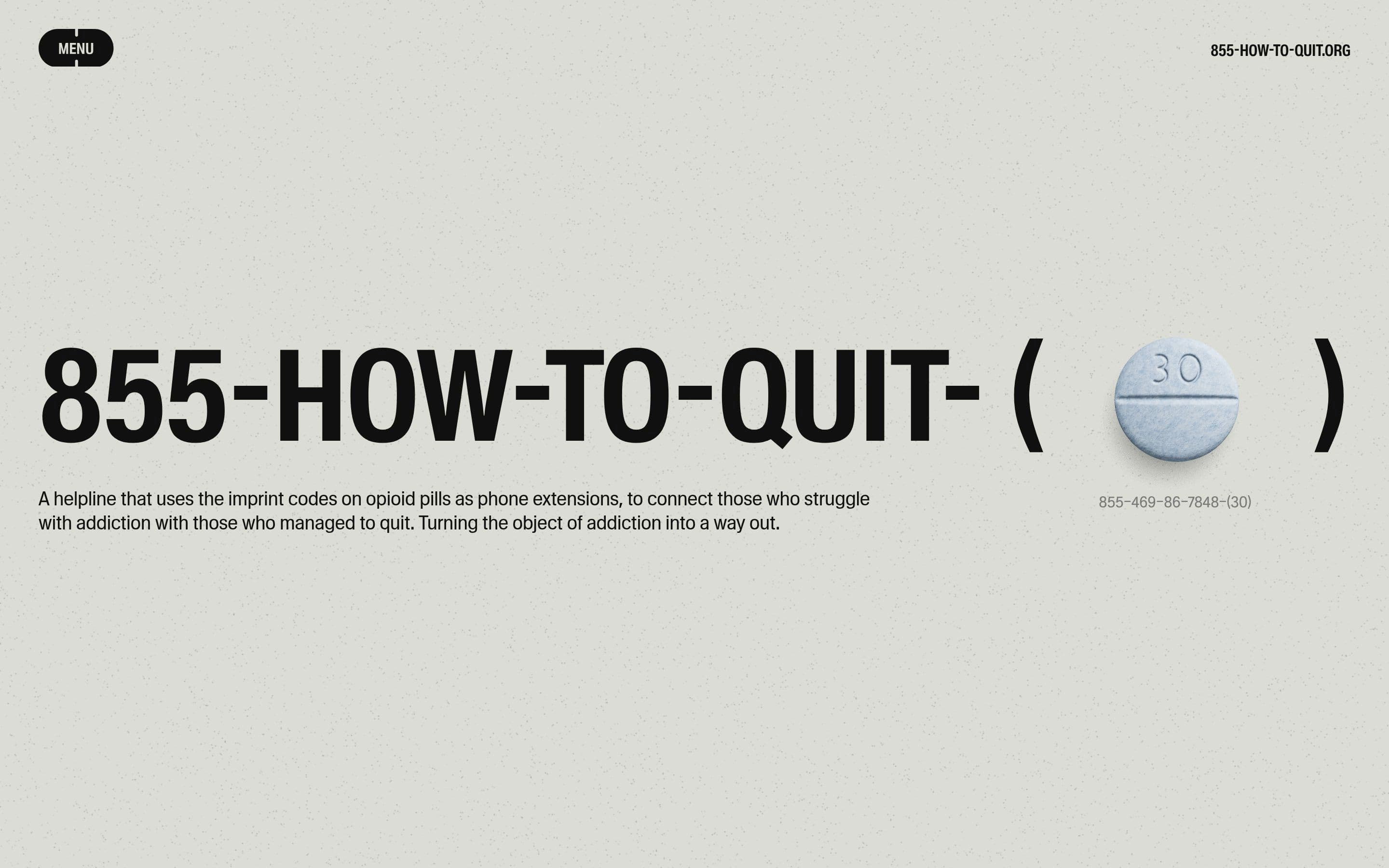
The project transforms the very identifiers of opioid addiction—pill imprint codes—into a lifeline for recovery. By using these codes as phone extensions, the helpline creates a direct bridge between people currently struggling and those who have successfully navigated the path to sobriety. It reframes the object of addiction as a tool for connection and support.
Visual Language & Motion
The design employs a stark and clinical aesthetic that mirrors the pharmaceutical nature of the subject matter while maintaining a sense of urgency and hope. Typography and layout are used to emphasize the pill codes, making them the central interactive element of the experience. Subtle transitions help guide the user through the process of identification and outreach.
UX & Performance
The user experience is built around the immediate need for assistance, prioritizing clarity and ease of navigation. By simplifying the process of finding help through familiar physical markers found on medication, the site reduces the friction often associated with seeking addiction support. The interface serves as a functional directory that translates physical objects into digital and telephonic actions.
Takeaway
This initiative demonstrates how creative problem-solving can repurpose the mechanics of a crisis to facilitate its solution. It is a powerful example of using design and technology to foster human connection and provide a scalable model for community-based recovery.